|
Evidence

|
If you are new to looking for evidence of badgers, it can seem that there is
a lot of information to learn. It is only when you really start studying
wildlife, that you realise there is a lot more you need to know than you thought
before you started! The following article provides a basic introduction to the
evidence you might come across if you are looking for badgers. However, we have
provided this article (and lots more information) in a detailed booklet and
presentation; which gives you are really detailed guide to finding evidence of
badgers. If you want to study this subject for educational reasons; or because
you are a member of a badger group; it would be worth looking at these documents
in our shop:
|
|
If you are looking for evidence of badger activity, these are the most common
things you should you look for:
|
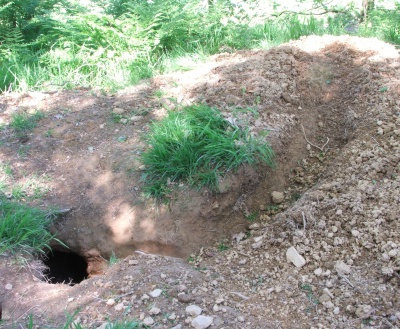
- Badger Setts - check the shape of the hole. Badger holes tend to
be the shape of a capital 'D', with the flat side downwards, and are
25-30cms wide and typically 20cm high. Tunnels which are well used
will normally have floors which become rock hard with the constant
passage of the badger. The actual entrance hole may be larger, but
it will normally return to this size within the length of a human
arm. Note that rabbits and foxes may also have burrow with large
entrances, but rabbit burrows will quickly become much smaller in
width. Rabbit burrows normally have round rabbit droppings on the
path to the hole too.
- A fox-hole is usually much smaller, and may contain several bones
at or near the entrance (badgers do not usually bring much food back
to the sett).
- You will probably notice a pungent smell from a fox-hole -
especially if the fox has been near the entrance. However, a fox can often use a badger sett
occasionally (even if badgers are in there too), so this is not a
perfect guide.
- Fresh
muddy tracks from the sett entrances.
- Badgers often place their back foot where their front foot was,
leading to smudgy foot-prints.
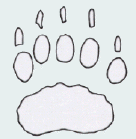
- The badger has short-wide feet which are said to be digitigrade
but often they walk as a semi-plantigrade. This means they have
prominent toes on their feet, but that they sometimes place their
whole foot on the ground. Note that we use the word "sometimes",
because you should expect to see examples of footprints like the one
shown below (claws, toes and main pad), but there will also be other
prints where they show a heel print too. The heel will show most
often in very soft ground, such as mud, sand or snow.
- Good foot-prints will show a prominent central pad, and either
four or five toes, with good claw marks.
|
-
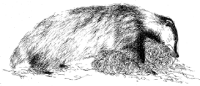
Fresh
bedding being dragged in.
 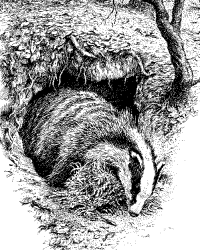
- Old bedding being ejected.
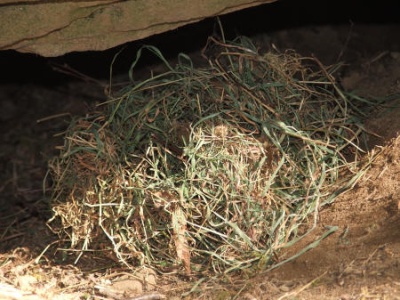
Badgers collect and drag bedding materials lon distances (up to 120
metres). Dry grass, bracken and straw are important for bedding
materials. They will also collect leaves, green plants, pine cones,
bits of plastic sheeting and even old clothes on occasion.
They will often leave clumps of bedding at or near the sett
entrance. This may be newly collected bedding materials which have
not yet been used or older materials which have been taken outside
to freshen up in the fresh air.
There is some evidence that green bedding materials are used more
often in the spring. In part this may be so that it decomposes
underground, giving some heat for the cubs in their nests.
- Large spoil heap outside main sett. This may contain old bedding,
bits of fur, and even small bones.
|
-
Latrine
pits near badger sett and elsewhere.
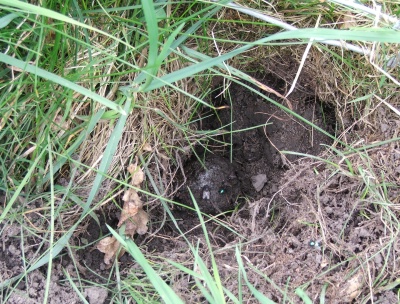
Latrines (dung pits) can vary in size, but they are often around
15cm across and up to 15cm deep. They will slowly be filled with
dung over a period, until almost full, whereupon a new one will be
dug nearby.
- The faeces may also contain evidence as to the badgers diet. Black
and slimy, implies a worm-rich diet. However, there may also be
evidence of cereal, grains, seeds or even insect casings.
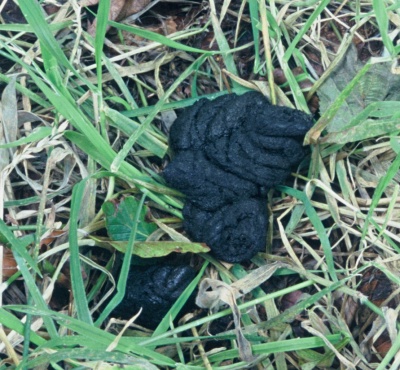
There will normally be a series of dung pits/latrines within 10 to
20 metres of a main sett. You may spot the holes first, but you may
be aware of some additional flies or a slightly musky smell in the
area. Old latrines may be covered only with loose grass or leaves,
so watch where you put your feet.
- Be aware that badgers will deposit 50% to 75% of their droppings
in other areas of the territory. Accordingly, you should expect to
find badger poo on territorial boundary paths or other pathways or
close to the edge of a badger territory too.
- Badgers will also use their musk and urine to mark their
territory; so neighbouring clans know where the boundaries lie. You
may therefore find dung which contains a yellow-brown cream or jelly
substance- This may be evidence of secretions from the subcaudal
gland (under the tail) or the anal glands.
|
- Scratching
marks on trees and rocks nearby.
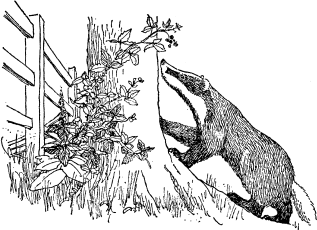
- Badgers may also use other uprights as scratching posts.
- These sometimes including fence-posts, wooden greenhouses, barns
or even garden furniture.
- Badgers may also rip bark from rotting logs or tree trunks to get
at any juicy grubs inside the bark.
- These scratch marks will usually show a series of four or five
parallel lines of deep gouges in the wood or soft stone. However,
you can sometimes also see lighter parallel lines of scratches,
where the badgers claws have clipped something they have hopped over
(such as an old log which obstructs a pathway).
-
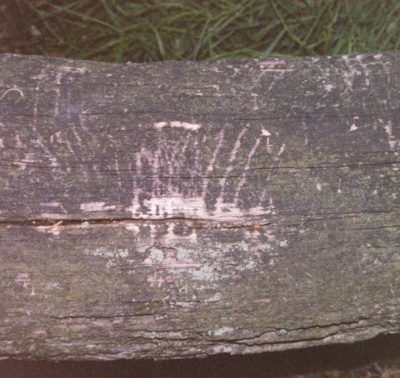
-
However, badgers may lose or damage claws, so it is possible a claw
may not show up very clearly. And, older badgers may wear down their
rear claws due to constant long-term use.
|
- Regularly
used badger tracks through woodland.
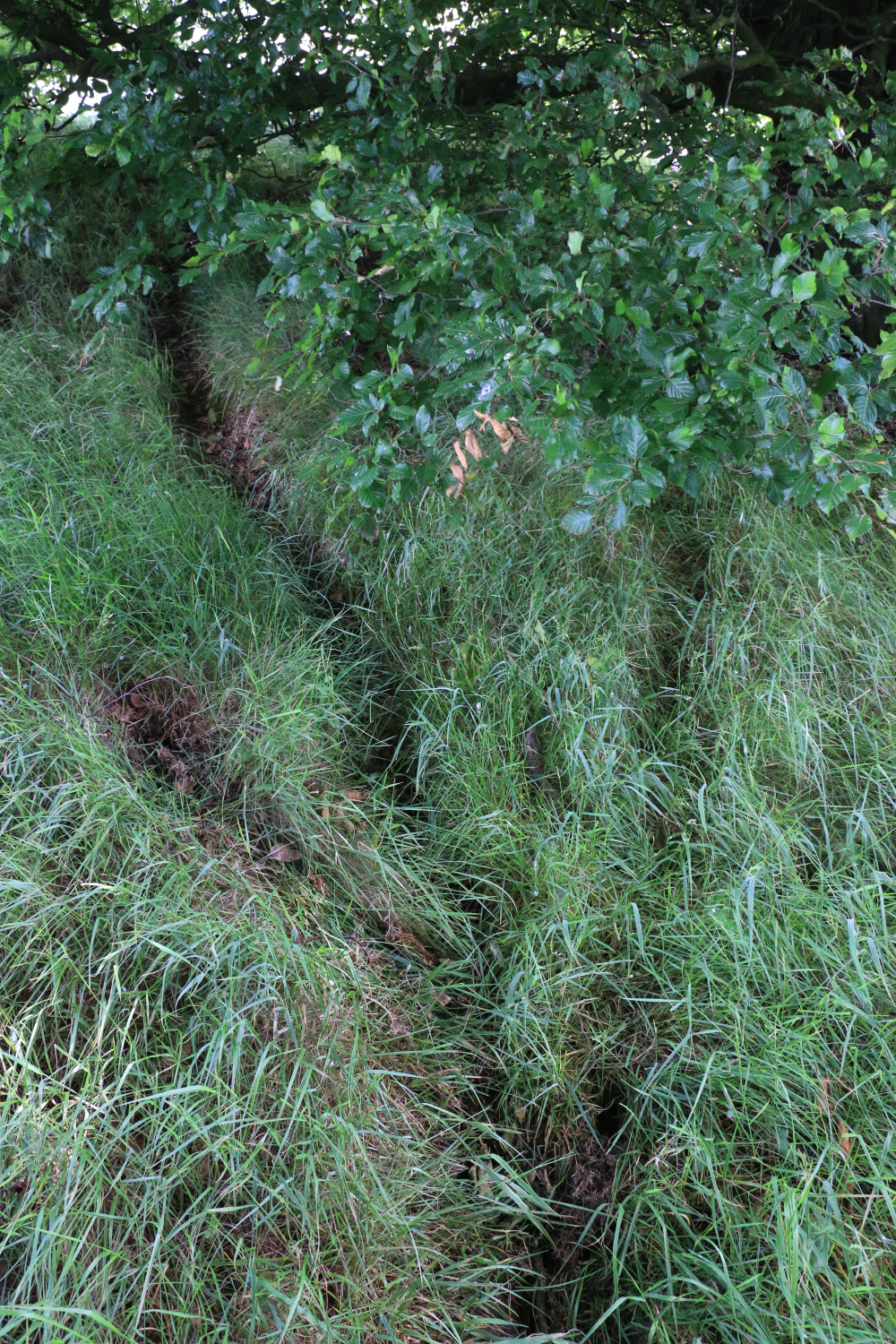
- Badger path under a fence.
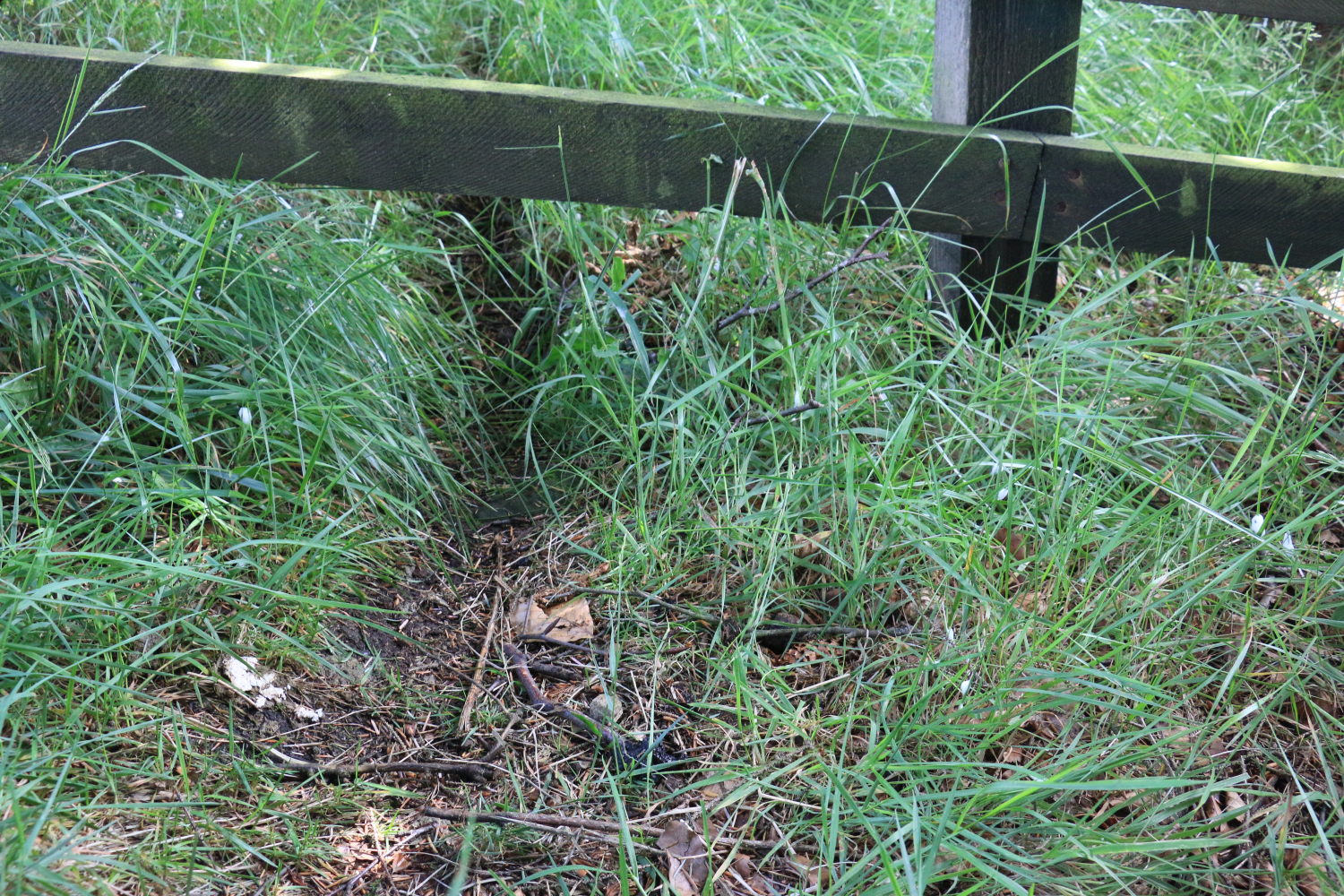
- These may have been used by many generations of badgers.
- Check for evidence when the path crosses a boundary; as there may
be badger hair on barbed-wire fences or rough wooden slats or
uprights. There may also be evidence of footprints near the
boundary.
- These pathways may be so well used, that they form a depression in
the soil; and form depressions through hedgerows that can be seen
easily from the road.
- It is also commonly believed that the exact route of these paths
is exceptionally well known by badgers. There has been much
circumstantial evidence that badgers appear to follow precisely the
same path across a field, even when that field has been ploughed
deeply several times, leaving no visible trace of an actual path.
|
- Badger
footprints on muddy tracks (when walking a badger will often place
its back foot where its front foot has been, meaning that prints can
be unclear or smudged).
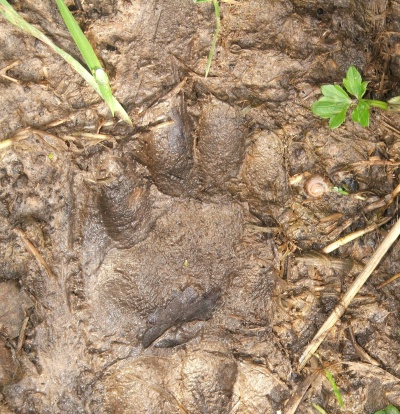
- A badgers front foot usually has longer claws than its back foot.
-
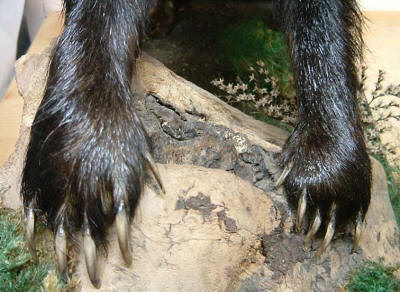

- A well used badger path will tend to become muddy due to constant
use by badgers; although any prints on the path may become smudged
by other animals who use the path later (such as deer, dogs, foxes, etc).
|
- Snuffle holes where badgers go after worms - specially noticeable
on lawns and golf-courses, these may be round or oval shaped, and a
few centimetres deep.
- Other ground disturbance where badgers have dug for roots, bulbs
and tubers.
- Wasps nests torn up out of the ground (badgers usually dig down
through the top, rather than going in through the front; as this
tends to avoid the risk of their nose getting stung!).
- Badger hair on barbed wire and other wire fences, or under fences.
- In cold still winter days, steam rising from active badger setts.
- If you have come across a skull and are wondering if it is that of
a badger, check it against the ones shown on the following web page Badger
Skulls.
|
Idea
- If you have an animal coming through a gap, narrow the gap a
little with firm sticks and double-sided sticky tape. With luck this
should catch some hair - helping you to identify the animal.
- Black and white (with some grey) hairs up to 12cm long are
probably badgers. These may be stained with the colour of the local
earth (especially at the ends). Badger hairs feel rough, and
"square" when rolled between the finger-tips.
- Hairs which are wholly red or brown are probably foxes or another
animal.
|
Ask Us
- If you suspect a badger is visiting, email the details to us (use
our Ask An Expert
service), and
we will give our opinion as to whether we think it is a badger, and
what other signs you might look for.
- If you let us know the nearest large town, we will let you know
where your nearest Badger
Group is too. They would always be glad to know of any new
badger sett, and they might be able to help you and the badgers out.
They should also be able to help protect the badgers, and the green
spaces they need to live
|
|
|